CasesTasks

Introducing Tasks

Penbox Tasks
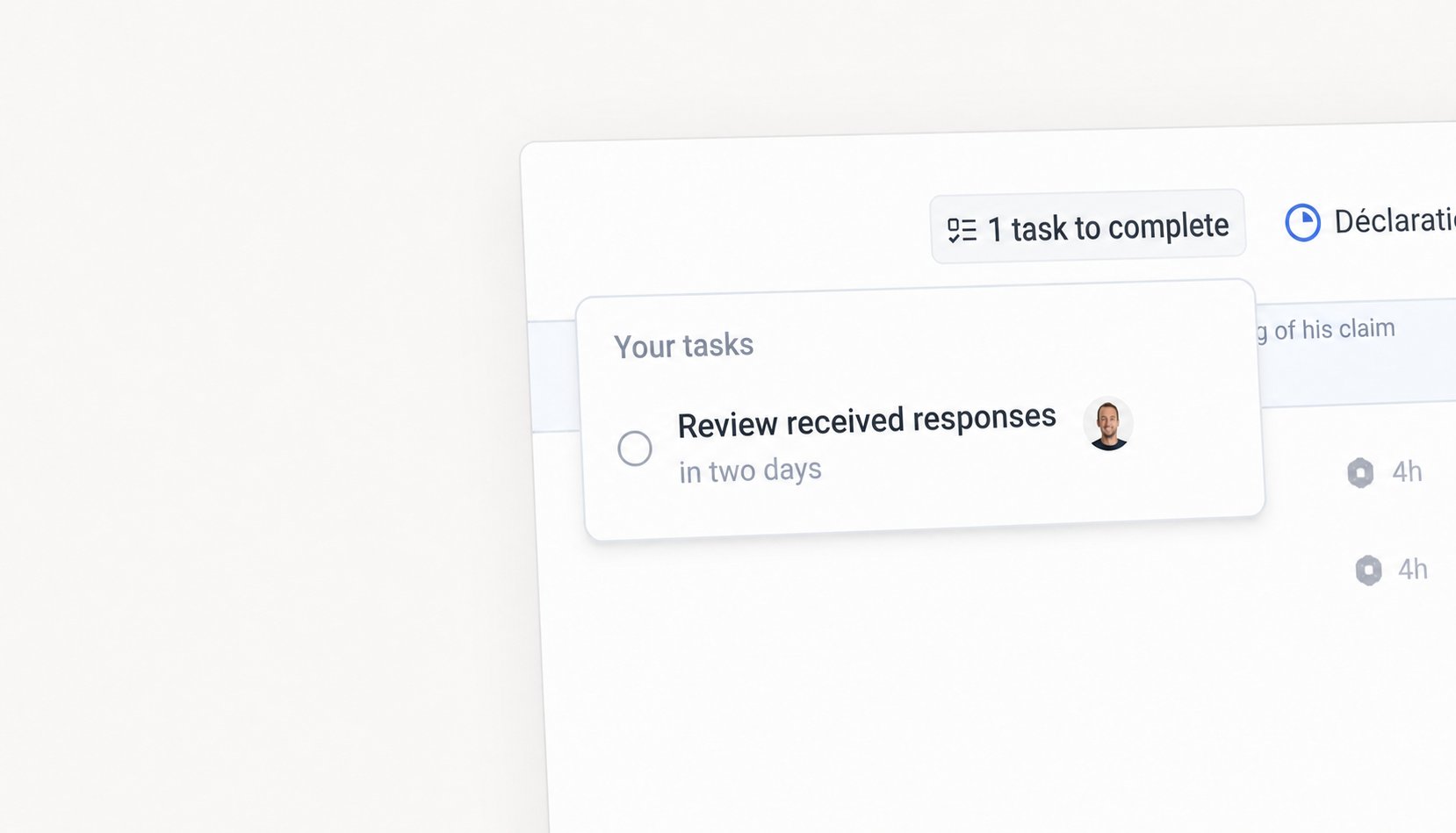
Knowing a case is waiting on something is not the same as knowing what you have to do about it. Tasks turn a case into a short list of next actions, with an owner and a due date.The case header shows how many tasks are still to complete. Open it and you get Your tasks: what to do, who it’s assigned to, and when it’s due. Tick one off and the case timeline records it.Every task sits in exactly one court, because it belongs to whoever can actually close it:
  • Your client’s court — “Complete the intake form”, due in a week. It flips to in progress the moment they open the form, and closes by itself when they submit.
  • Your team’s court — “Review the submitted answers”, due two days after the form comes back.
You don’t set any of this up case by case. Tasks come from your case template: each form step creates the right tasks when the form is sent, opened, or completed. Per step you can switch tasks off, change a due date, assign one to a specific colleague or to a contact role, or add tasks of your own, like Call the insurer, due in 3 days.Nothing goes quiet. When a client task runs past its due date, Penbox raises a follow-up task for the case owner, due the next day, linked back to what was missed. Close either one and the other closes with it. And if the case is connected to a BRIO claim, that follow-up also logs an open activity on the claim folder, so a broker working in BRIO sees the same thing you do. Routine tasks are never mirrored — BRIO only hears about it when someone genuinely has to act.Tasks are available today in all workspaces.
CasesEmail

Case collaborators

Case Collaborators
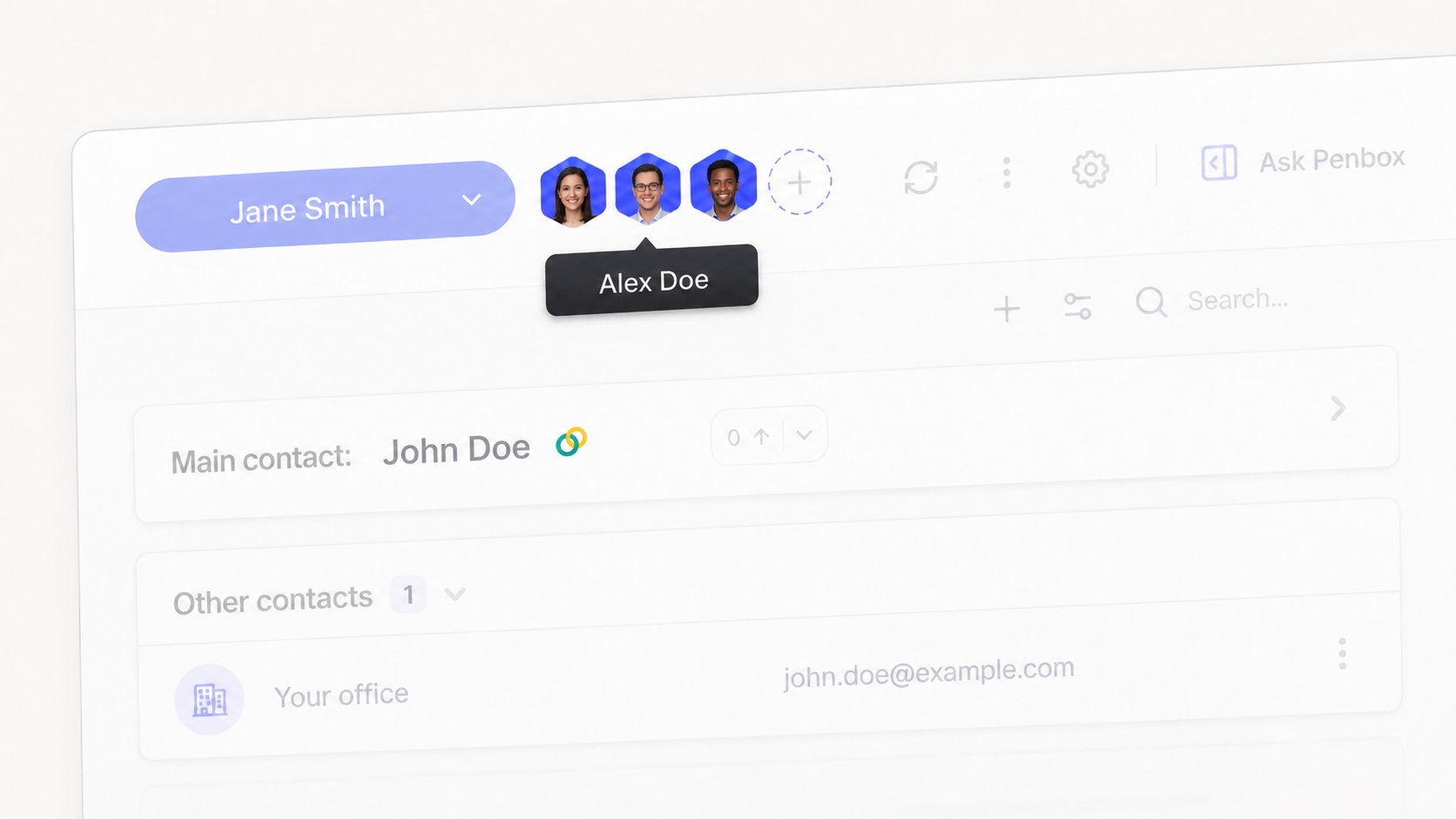
A case used to know only one member of your team: its owner. Everyone else working on it was invisible. Collaborators fix that.Open a case and you’ll see the people involved next to the owner: hover an avatar for a name, click + to add a colleague, remove anyone who no longer needs to follow along.Most of the time you won’t have to add anyone. Penbox recognizes your workspace members and enrolls them by itself:
  • A colleague emails a case, is CC’d, or replies from a connected inbox — they become a collaborator
  • A colleague forwards a client email to Penbox — the client is attached as the contact, and the colleague as a collaborator
  • A case template can carry default collaborators, copied onto every case created from it
Each avatar tells you where it came from, so you can tell an automatic enrollment from a manual one.Colleagues are no longer mistaken for clients. Before, a member who emailed a case could be attached as a contact, sometimes in the main client slot. Recognized workspace addresses are now recorded as collaborators instead, keeping your client data clean.Find your work faster. The cases list has a new My cases filter that brings back everything you own or collaborate on, with matching counts.Collaborators are visibility only: they don’t change who can access a case. They’re available today in all workspaces.
CasesAI

AI generated fields

AI Generated Fields
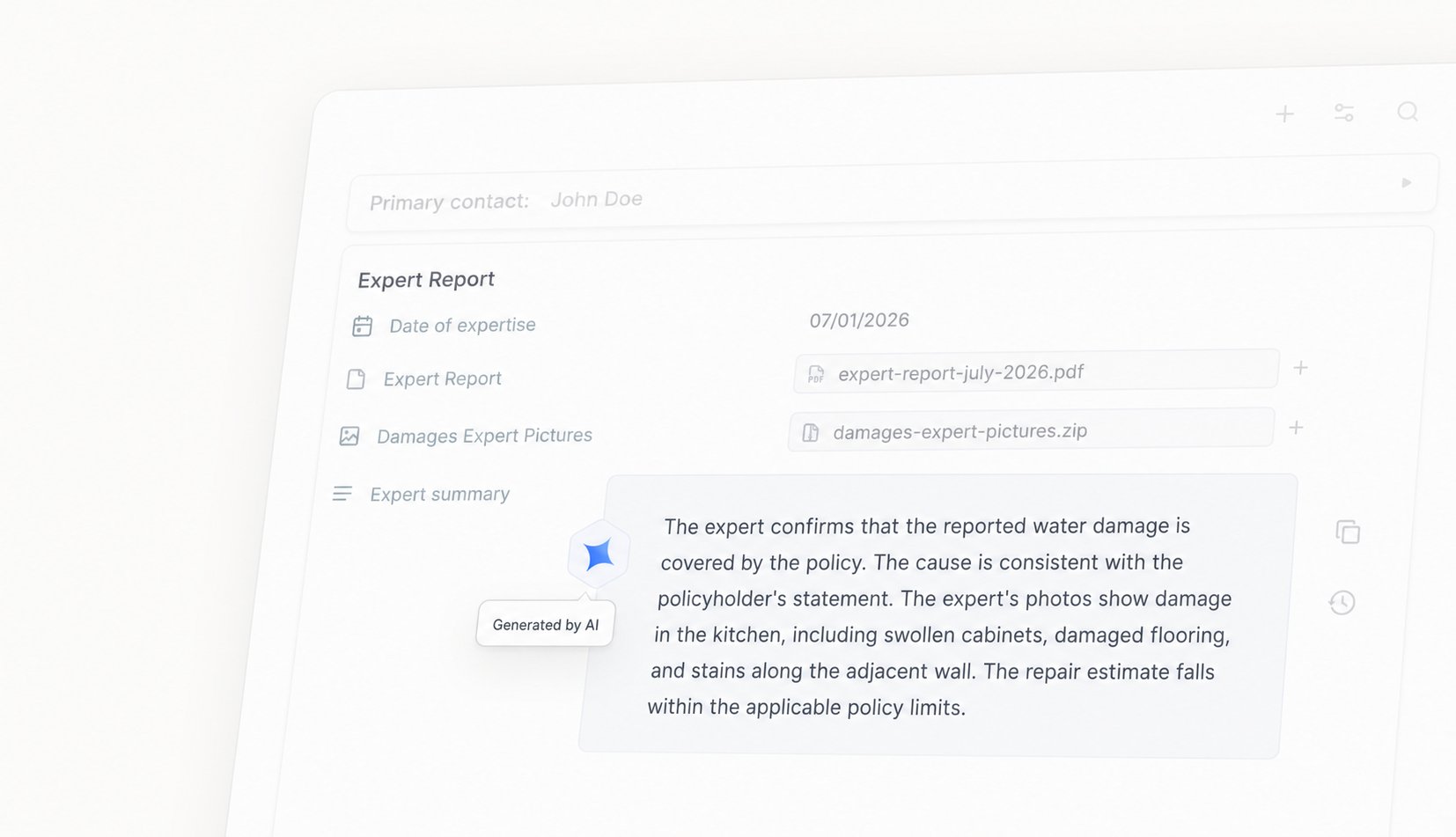
AI generated fields are a new way for Penbox to keep your case data up to date for you.Choose the fields the AI should maintain, describe what each one should contain in plain language, and pick the event that triggers it, such as an intake form being completed. From there, Penbox uses everything already on the case, including forms, contacts, and existing data, to write a structured value into each field.For example:
  • Summarize a claim as soon as the intake form is completed
  • Classify new cases into a category and route them to the matching case template
  • Derive a risk level or priority from the answers a client submitted
Generated values are always labeled. Each one carries an AI badge in the case data panel, so anyone working on the case can tell which values were written by the AI and which were entered by a person. Editing a field replaces the generated value with yours, and the field is treated as manual from then on.AI generated fields are configured on case templates through the case template assistant: describe the job and it sets up the trigger, the target fields, and the instructions for you. They are available today in all workspaces. Learn more in the docs.
Cases

Configure your New Case form

Choose exactly which fields the New Case form asks for, and whether each one is required, optional, or hidden. Set it once for the whole workspace, or override it per case template so every kind of case starts with just the fields it needs. Required fields are enforced, so a case can’t be created without them.
FormsSecurity

Secure generic links with one-time passcodes

Forms shared through a generic link start anonymous, so anyone with the link could open them. Now, the moment a filler enters their email or phone, Penbox locks the request to that person: reopening it later requires a one-time passcode sent to that same email or number. The person currently filling it in is never interrupted, and the protection can only tighten, never loosen.
SignaturesSecurityDocument Intelligence

Improvements and fixes

  • Signatures. Requests now complete reliably when the signer is redirected back, and transient hiccups while a signature is being prepared no longer block the page.
  • Document Intelligence. Extraction results show the correct field name and type again.
  • Sessions. An expired session recovers silently in the background instead of failing your next action.
  • Performance. Document generation now runs off the main thread, keeping the app responsive under load.
  • Security. Patched high-severity vulnerabilities in axios and multer.
Connections

Connections keeps growing

Since launching Penbox Connections, we’ve deepened the BRIO connector for contacts.

Import at scale

Bring in your BRIO contacts in the background with live progress, including contacts that have no email or phone.

Add contacts back to BRIO

Add a case contact to BRIO as a party without leaving Penbox, straight from their hover card.

Readable everywhere

Party codes now display as human-readable labels, BRIO users are matched to your Penbox workspace members, and connected data appears the moment you open a case, with no refresh needed.
OutlookEmailAI

Your connected mailbox turns email into cases

Connect an Outlook or Gmail mailbox and Penbox reads incoming email as it arrives, matches it against your case templates, and opens the right case automatically. The case is created in the language the email was written in, with the message and its attachments already attached.The add-in becomes a reader: open a classified email and the case is already there, no waiting. You stay in control with a per-template switch that decides which templates take part.